Photography Tutorial · 2022-04-10
What Is Photographic Pre-Production? 90% of Enthusiasts Get It Wrong
Thomas Chu Photo
Whenever we post photos, we see all kinds of questions about the 'pre-production' side of photography — which camera was used, what the exposure settings were, and so on. But those are only a small part of pre-production.
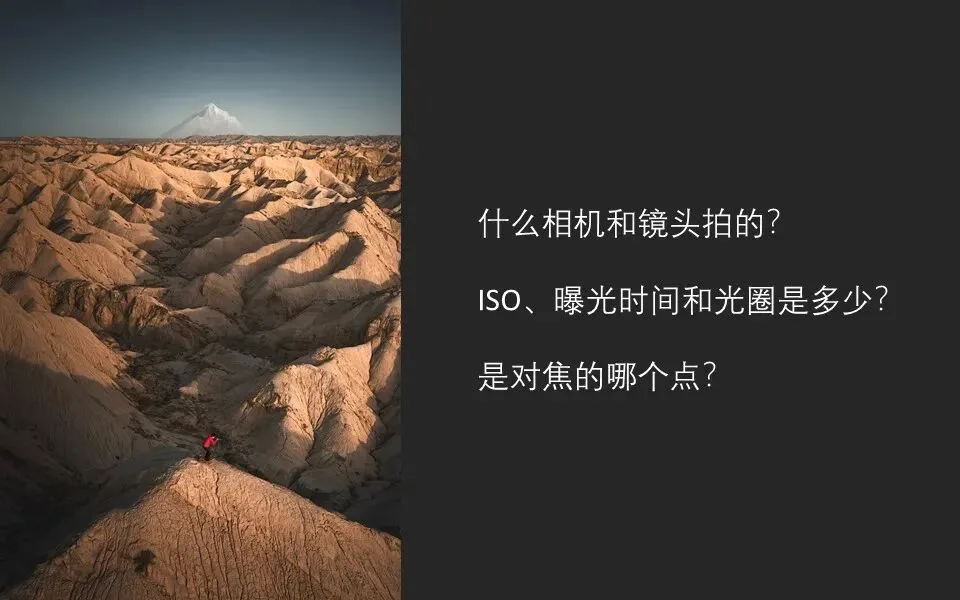
In today's tutorial, Thomas shares the complete pre-production workflow. The preparation, planning and scouting that happen before you press the shutter matter far more than dialing in exposure and focus.
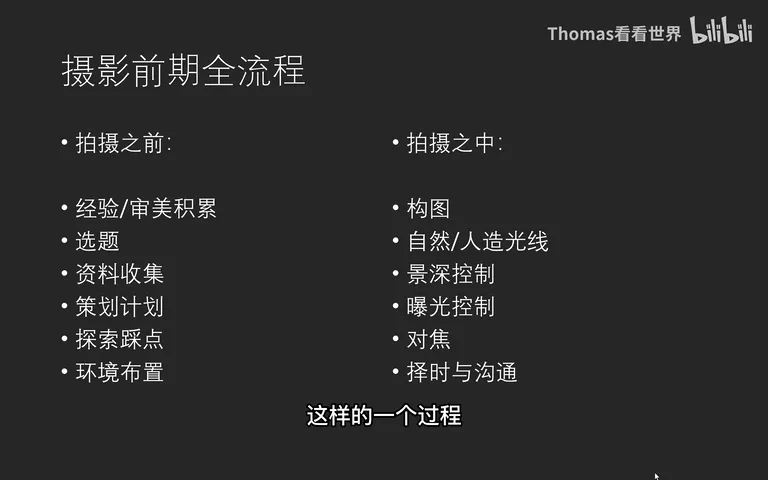
Video Tutorial
▶ Watch the video tutorial on Bilibili
This is the fully illustrated companion to the video above. "Which camera and lens? What settings? Where did you focus?" — the questions that fill every comment section are, in fact, only a small slice of pre-production. Thomas answers three questions: what the real pre-production workflow looks like, why it is hard, and how to improve it systematically. Keyframe screenshots accompany the text: build the framework here, then hear the details in the video.
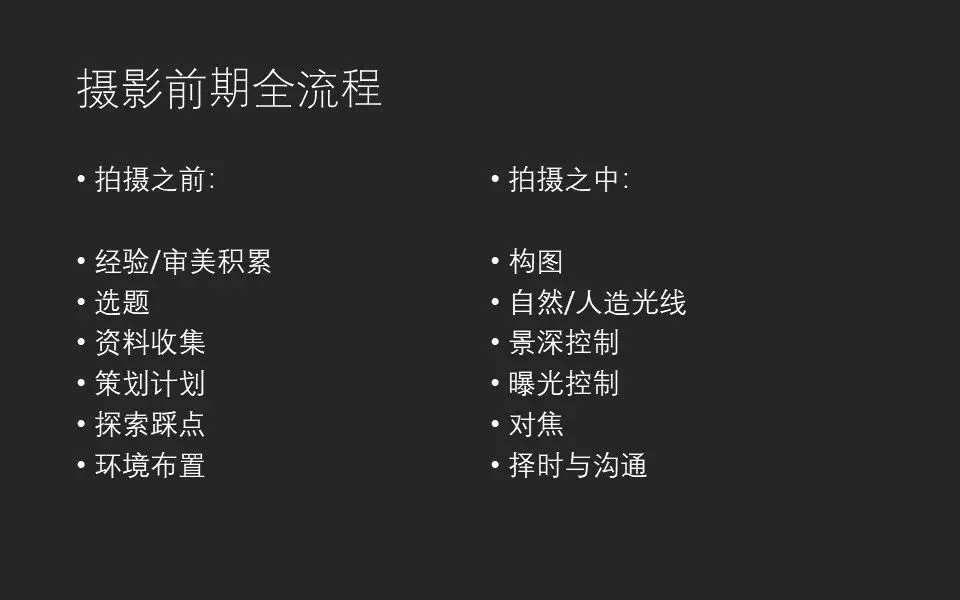
01 Before the Shoot: Six Steps Before You Press the Shutter
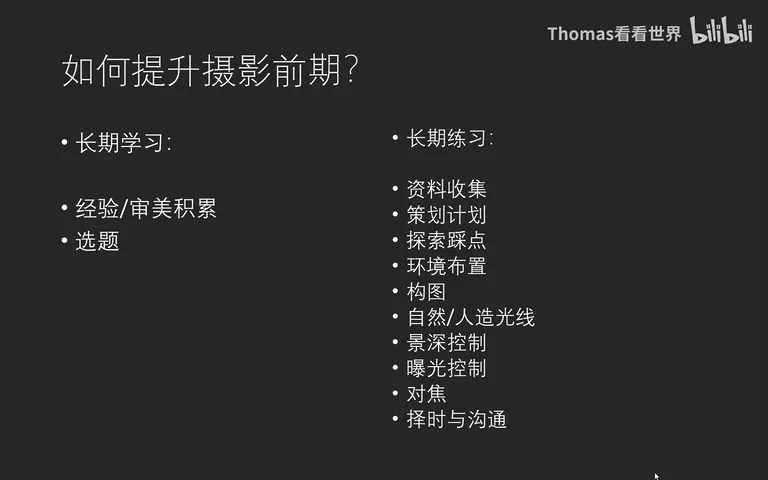
Pre-production splits into what happens before the shoot and during it. Step one before shooting is long-term experience and aesthetic accumulation — the most overlooked of all; step two is subject selection: why shoot a series like "Trains of China," why travel to this place and not another — the topic, the timing and the location all matter enormously (at 0:45-1:08 in the video); step three is research, studying how other photographers approached similar subjects or the same place — an invaluable reference (at 1:09 in the video).
Step four is planning: which season, which dates, whether to avoid the full moon (at 1:30 in the video); step five is scouting — arriving a day or two, or at least a few hours early, to line up the right camera positions (at 1:41 in the video); step six is staging the scene, which for portraits means planning wardrobe, props and the location in advance (at 1:54 in the video). All of this happens long before the shutter — days, months, even years ahead (at 2:14 in the video).
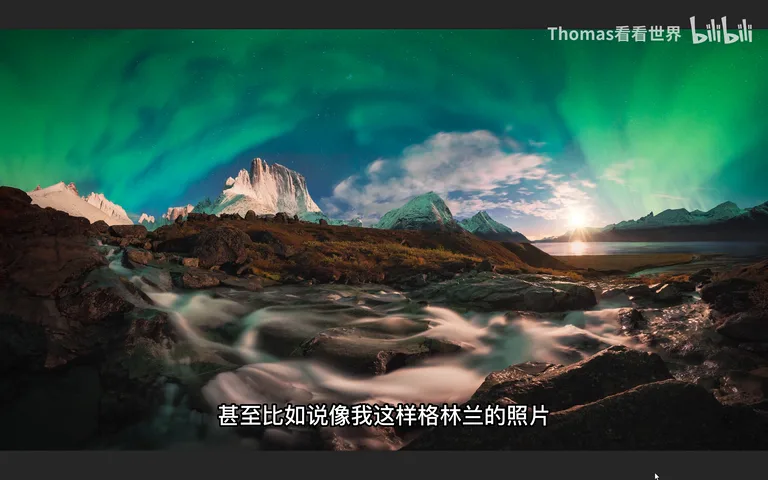
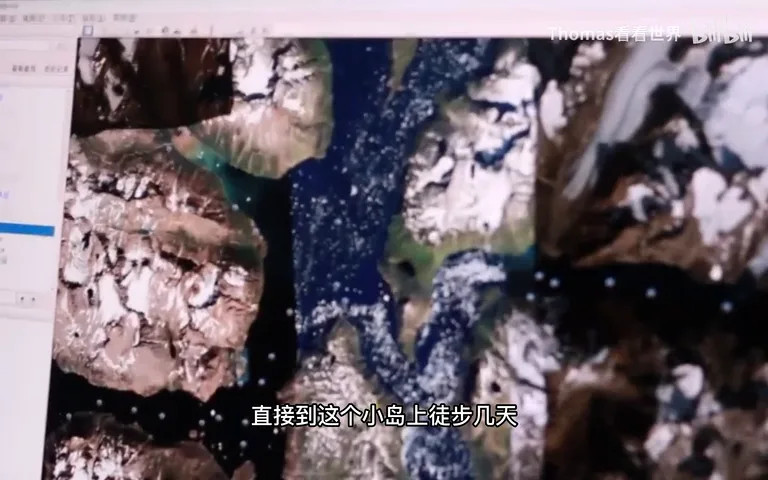
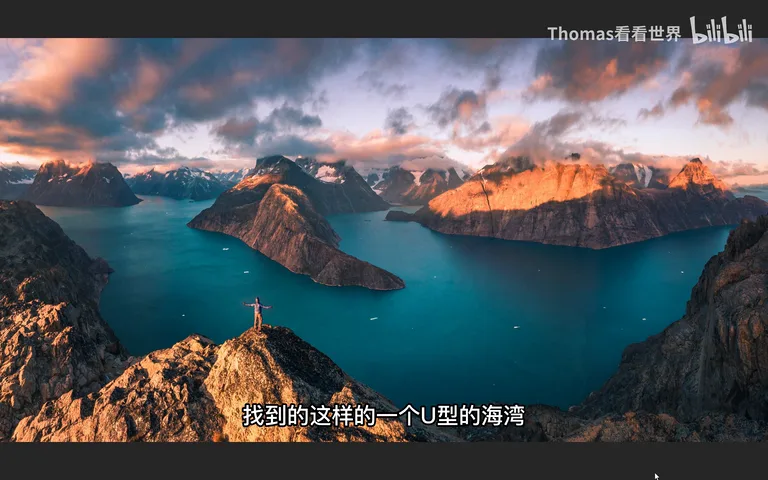
Thomas demonstrates with his own Greenland project: before shooting he screened locations carefully on satellite maps and found a U-shaped bay; on site he chartered a boat straight to a small island and spent days scouting and exploring on foot; only when the right sunrise finally came did he press the shutter (at 5:12-5:35 in the video).
02 On Location: Six Elements That Outweigh Settings
On location, composition comes first; second is light — natural light for landscapes, artificial light for portraits, and the choice and arrangement of light is a discipline of its own (at 2:23-2:46 in the video); third is depth-of-field control: what stays sharp, what blurs, and if everything must be sharp, whether to use hyperfocal distance or focus stacking (at 2:48-3:01 in the video).
Exposure — everyone's favorite question — takes up only a tiny share of pre-production: Thomas shoots mostly in Aperture priority, letting the camera decide and then fine-tuning with exposure compensation (at 3:04-3:20 in the video). Focusing matters hugely for night scenes, portraits and wildlife, and deserves dedicated practice (at 3:21 in the video). Finally come waiting and communication: for landscapes, documentary and street work you wait for the right moment, light and instant — all the more so for time blends; and any photo involving people means communicating with models, subjects or site managers (at 3:32-4:03 in the video).
03 Why Pre-Production Is So Hard
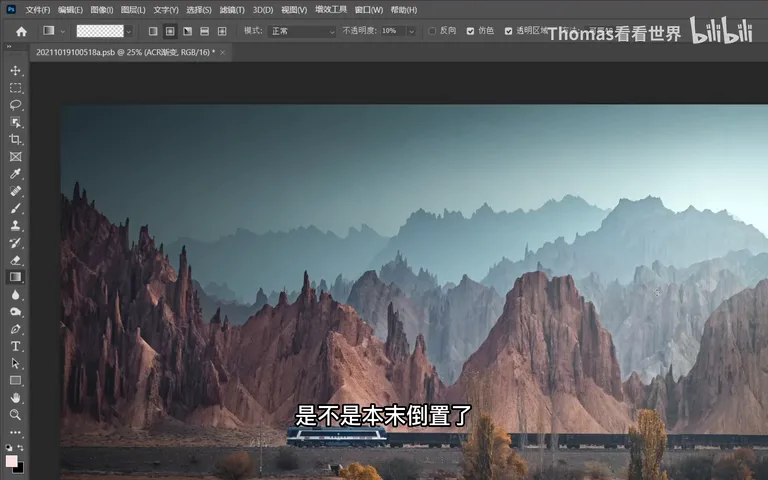
Thomas once shared a photo that took four hours to retouch, and a commenter accused him of putting the cart before the horse. It's exactly the opposite: four hours of post is a piece of cake — take subject selection, research, planning and scouting seriously, and a few hours of pre-production per photo is normal, with one or two days being common (at 4:25-4:58 in the video). A project like Greenland meant two months on the first visit, four visits in total; add years of aesthetic and experience accumulation, and the pre-production timeline stretches to months or years (at 5:00-5:50 in the video).
More importantly, there is no crash course for pre-production. Take composition: beyond the rules of thirds and other formulas that content farms recycle, any slightly unusual situation demands case-by-case judgment — such instincts cannot be rushed, only built through years of looking at images and practicing (at 5:52-6:17 in the video).
04 How to Get Better at Pre-Production
The methodology boils down to three words. Learning: follow strong photography competitions, exhibitions and websites to build your aesthetic; Selection: study other photographers' photos and projects and browse photography sites, so you learn where good pictures happen; Practice: bring the workflow into every shoot — say you're photographing a scene in a park next weekend: do the research on how local photographers shot it, make a plan and check the weather ahead, and if you're shooting at dawn, scout the afternoon before, rehearsing the next morning's light and composition on site (at 6:20-7:48 in the video).
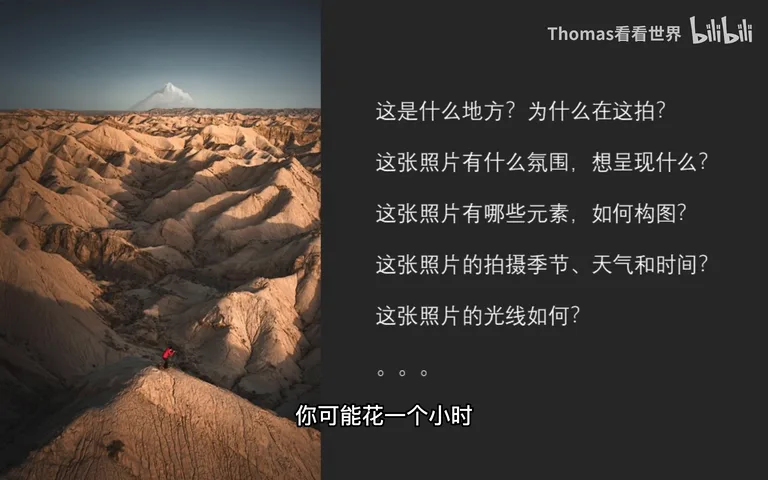
Pre-shoot preparation is the step almost every enthusiast skips, and it is precisely what makes good photos possible. Pre-production is a photographer's real competitive edge: post-processing techniques and PS tools can be picked up in an hour, but finding camera positions and compositions in the field — that experience has no shortcut, only steady practice (at 7:53-8:26 in the video).
1. Pre-production = six pre-shoot steps (aesthetic buildup, subject selection, research, planning, scouting, staging) plus six on-location elements (composition, light, depth of field, exposure, focus, waiting and communication); 2. Stop asking only about settings — exposure and focus are a tiny slice, and Aperture priority plus exposure compensation covers most situations; 3. What makes it hard is that no crash course exists: it is billed in hours, days and years, built from long looking and long practice; 4. Treat every shoot as a full rehearsal — research, plan, scout ahead, rehearse on site: pre-production is the photographer's core competitive edge.