Photography Tutorial · 2024-04-07
How to Tell Stories with Photos? On-Site at the 2023 World Press Photo Contest, Analyzing the Secrets Behind the Photo of the Year!
How can you tell stories better with photos?
How to use complex visual languages like light-dark, warm-cool, light and shadow, and metaphor to tell stories well?
In today's photography tutorial, Thomas will take everyone to Amsterdam, the awards ceremony of the World Press Photo Contest, to talk with Mads Nissen, winner of three World Press Photo of the Year awards, and interpret the secrets behind his photographic masterpieces.
Video
▶ Watch the video tutorial on Bilibili
This article is the illustrated companion to the video above: Thomas visited the World Press Photo exhibition in Amsterdam, where Mads Nissen — winner of the 2023 World Press Photo Story of the Year — was guiding visitors in person. Using his series "The Price of Peace in Afghanistan", it breaks down, photo by photo, the visual language of top-tier documentary photography — light and dark, warm and cool, metaphor, expression and out-of-focus foregrounds. None of this belongs to photojournalism alone; it applies just as much to travel, street and even landscape photography.
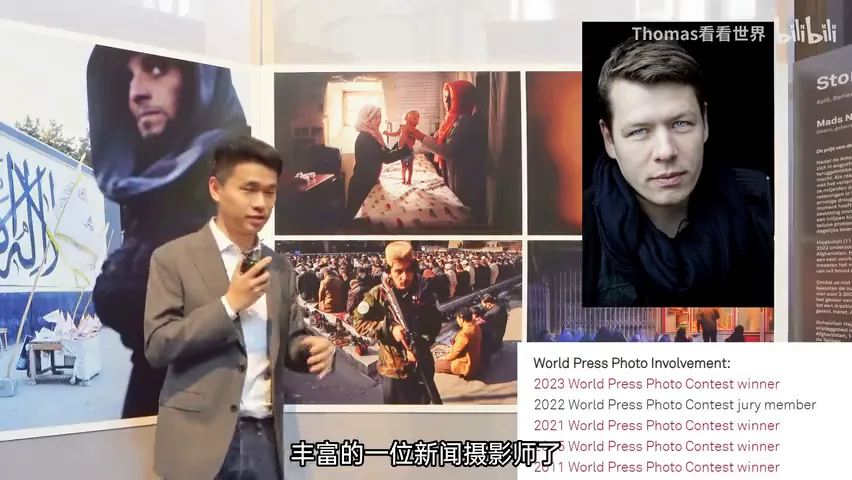
Start with an info card: at 1:04 in the video, Thomas introduces the author of the series, Mads Nissen. The card lists his World Press Photo record — a winner in 2020, 2021 and 2023, all three times taking the annual top prize, plus a jury member in 2022 — making him one of the most decorated photojournalists working today.
01 On Site: The Power of the Story of the Year
The video opens with Thomas standing before the red "WORLD PRESS PHOTO" sign at the exhibition entrance (at 0:02). The subject of this episode is the 2023 World Press Photo Story of the Year — Mads Nissen's "The Price of Peace in Afghanistan", a series documenting the daily struggle of Afghan people through 2022.

The series is set against this backdrop: after 20 years of American occupation the troops withdrew and the Taliban returned to power; Western sanctions cut off international aid, and ordinary people sank into extreme poverty and hunger (a rapid flash of the whole series at 1:07-1:24). The walkthrough begins with the first image: a portrait of a boy against a clean background in pure natural light, one that still took the photographer half an hour or more — "because I don't matter; everything is about him" — the 15-year-old Khalil (at 2:19-2:31).
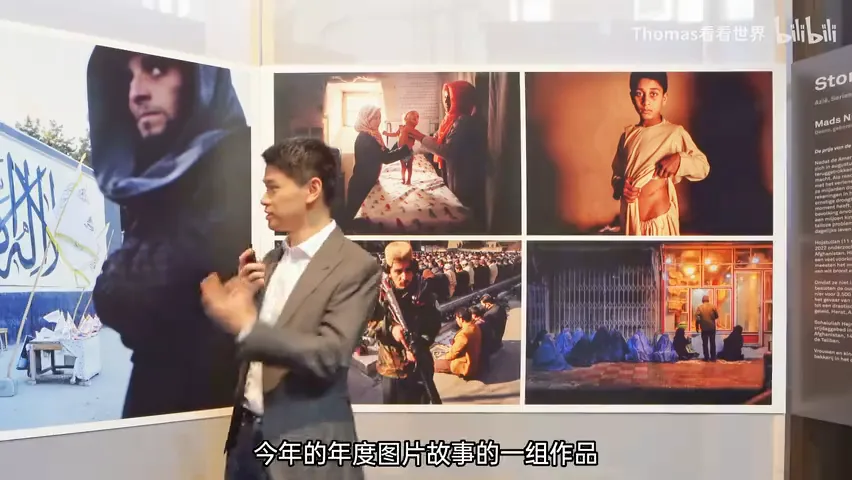
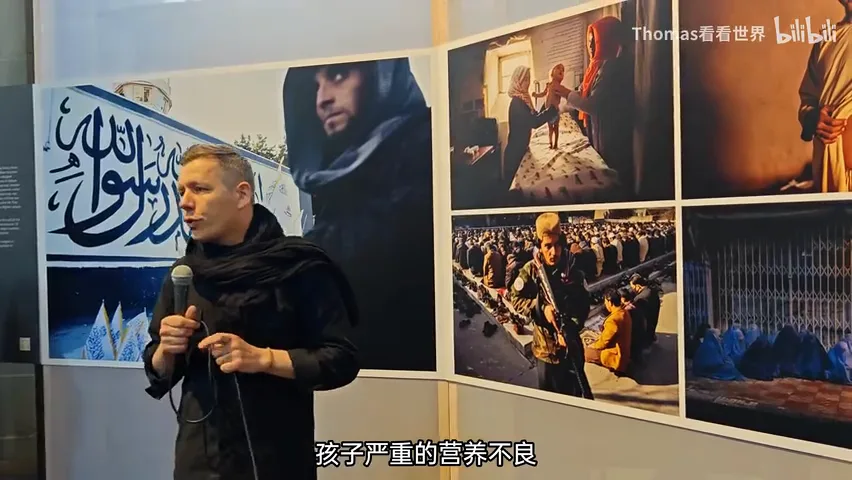
What makes the video even more special is that the person explaining the work is the author himself. At 6:51, Mads Nissen stands before his own photographs recounting how they were made — which moments were waited for, which details were deliberate — straight from the photographer's mouth.
02 Metaphor and Contrast: The Locked Gate and the Bright Bakery
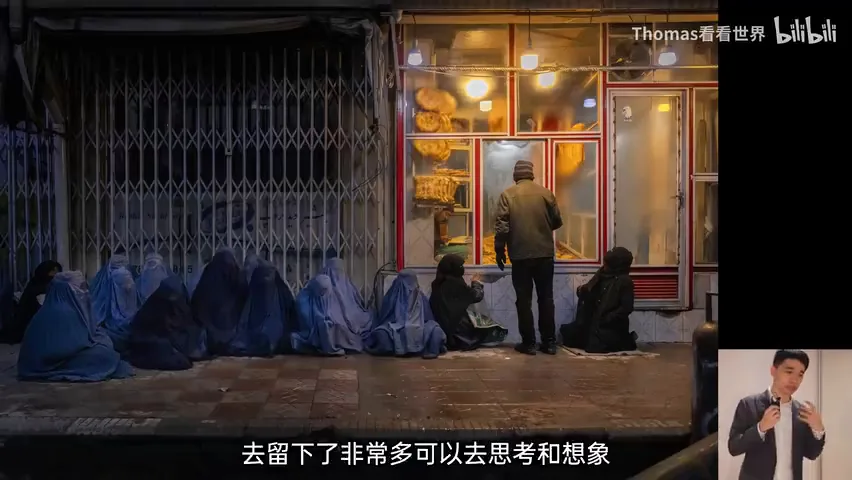
The second photo is one Thomas calls "simply brilliant" (at 3:28). Its left and right halves form multiple layers of contrast: on the left, a locked gate in cold, dim tones with women in blue burqas sitting on the ground praying; on the right, a warm, brightly lit bakery with a middle-aged man standing at the counter buying bread.
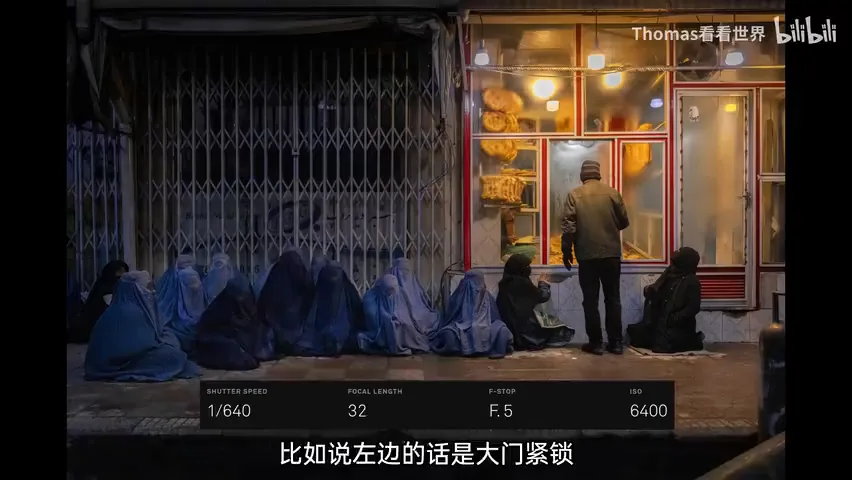
These visual elements mirror one another: the locked gate and the veiled women echo each other, hinting at where their fate may lead; and in a place of extreme food scarcity, the man standing elevated before stacks of flatbread turns food itself into a symbol of power, leaving the viewer enormous room for thought and imagination (at 4:16). The video also shows the shooting data: 32mm, f/5, 1/640 s, ISO 6400 (at 3:34).
During the tour the photographer revealed he returned to this spot five times: one day a bicycle parked there ruined the frame, so he came back the next day (at 4:55), and he pressed the shutter only when the begging women were at their most numerous and the bread-buying man stepped into the frame at just the right moment. Great photos are rarely stumbled upon — they are waited out.
03 Light Against Dark: Hope and Cruelty in One Window
The next photo shows a severely malnourished infant in a hospital (at 5:35). The choice of scene is deliberate: the room is rendered almost black, with a single window throwing light across the baby's body — the brightness suggests hope, while the skeletal frame is unbearably cruel, two emotions colliding in a single frame. The settings are just as spare: 28mm, f/2.8, 1/160 s, ISO 800.
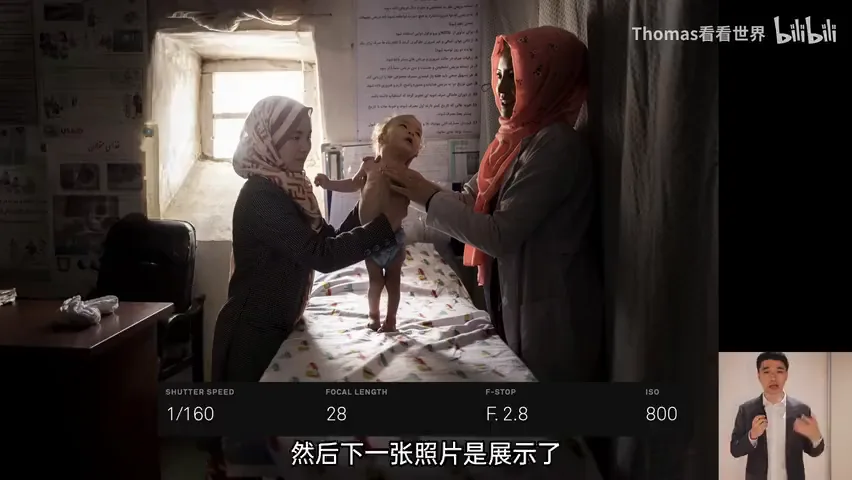
Thomas uses this frame to make a key point: great documentary photography is not casual recording patched over by captions — the picture must speak for itself (at 5:57). In the video era, if a photo needs a wall of background information to be understood, it does not rank among the best of photojournalism; the power of "one image worth a thousand words" is exactly what separates a photograph from footage.
The principle extends to street, travel and even landscape photography: look for symbols, for shifts of light and shadow, and build images that match your own mood and message (at 6:32).
04 Gaze, Angle and Blur: Building Unease
The analysis of the fourth photo is the most detailed (at 7:16). Most people would simply photograph the vendor, but this photographer first spends forty to fifty minutes on site letting people relax around him, all while moving constantly to find the best vantage. Here he held the camera at chest height, framing through the flip-out screen, and so captured the fierce glare of the man in the foreground — at once a foreground element and a wave of pressure hitting the viewer.
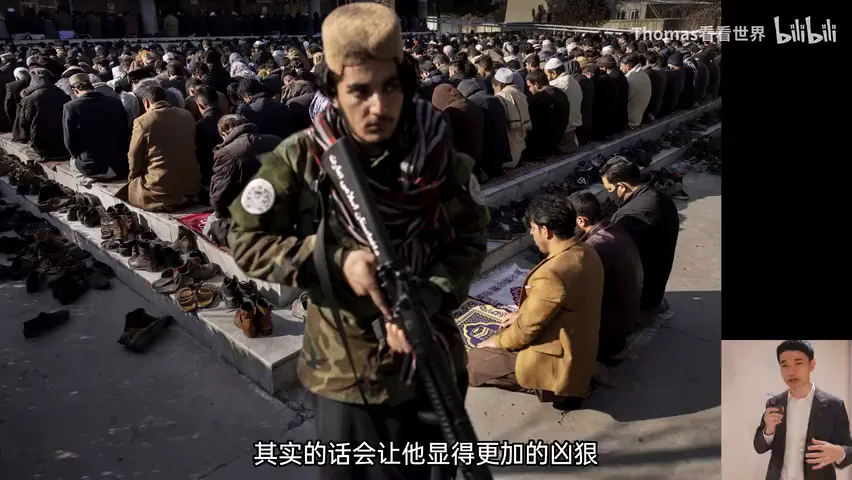
In another frame inside a mosque, the focus falls on the praying crowd behind while the Taliban soldier in the foreground dissolves into blur (at 9:03). That motion blur makes him appear more menacing; with the entire foreground soft, the viewer feels a distinct unease — precisely the emotion the photographer intended. Thomas adds that this mood may carry bias and stereotype, but there is no denying the photographer conveyed exactly the impression he set out to create.
05 Telling the Story: Full Coverage and Two Kinds of Homework
The second lesson is how to tell a story completely (at 9:40). Were we to photograph Afghanistan, we would likely fall into clichés or random street snapshots; this photographer's coverage, from shooting to selection, is exhaustive: beggars, cooking scenes, vendors earning a living, pollution created in the making of food; women, children, the elderly and men of every class, even the new security threats people now face.
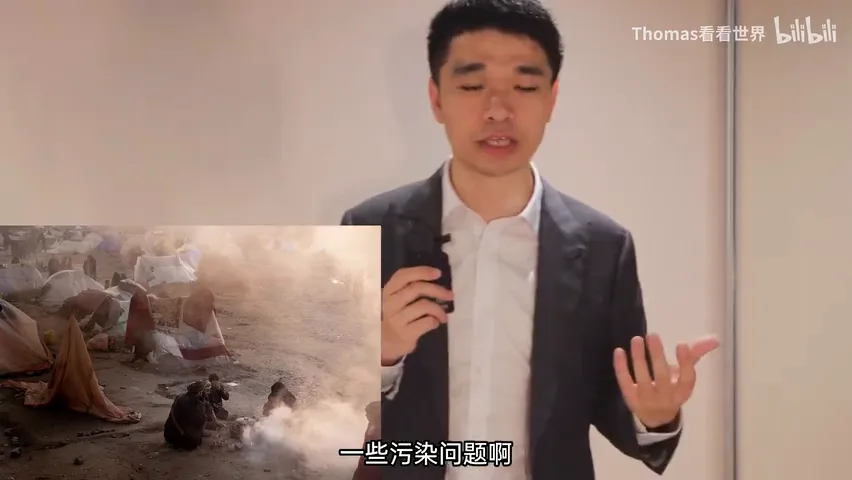
Each photo is not only visually striking but also represents one facet of the event; only combined do they form an extraordinary picture story (at 10:29). As for method, the three-time grand-prize winner works in two ways: deep immersion — building trust with locals before photographing in depth — and patient persistence in the street: once he finds a strong scene he never packs up early, returning five days in a row and waiting for the moment when people, light and metaphor all fall into place.
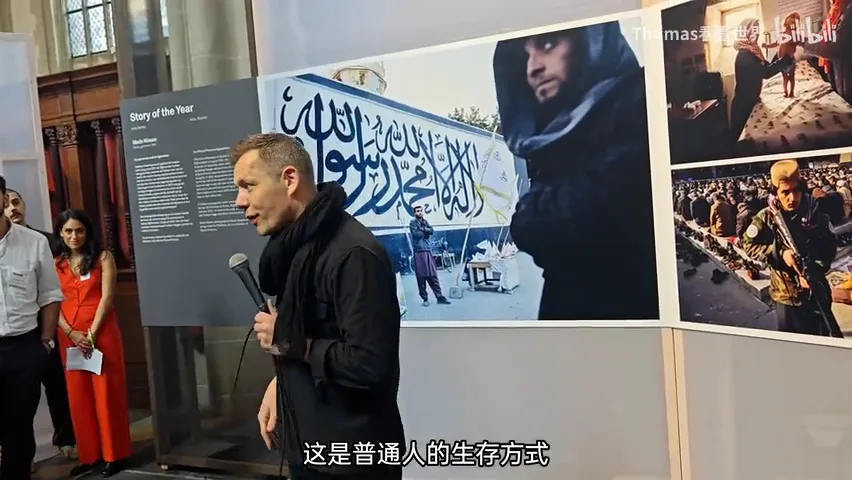
Thomas closes by underlining the point: telling stories in the language of photography matters immensely — if we want to bring China's stories to the world, we need the same visual language, the same symbolism and metaphor (at 11:42).
1. Visual language is the heart of storytelling: light and dark, warm and cool, gesture and expression all become sentences of the narrative; 2. Learn to use symbols and metaphor — a locked gate, stacks of flatbread — and let the photo speak for itself instead of leaning on captions; 3. Good photos are waited for: revisit a found scene again and again until people and light align; 4. Tell the whole story: each image carries one facet, and only together do they gain depth.
HD video:
https://www.bilibili.com/video/BV1AP411d7tr/
2023 World Press Photo Story of the Year
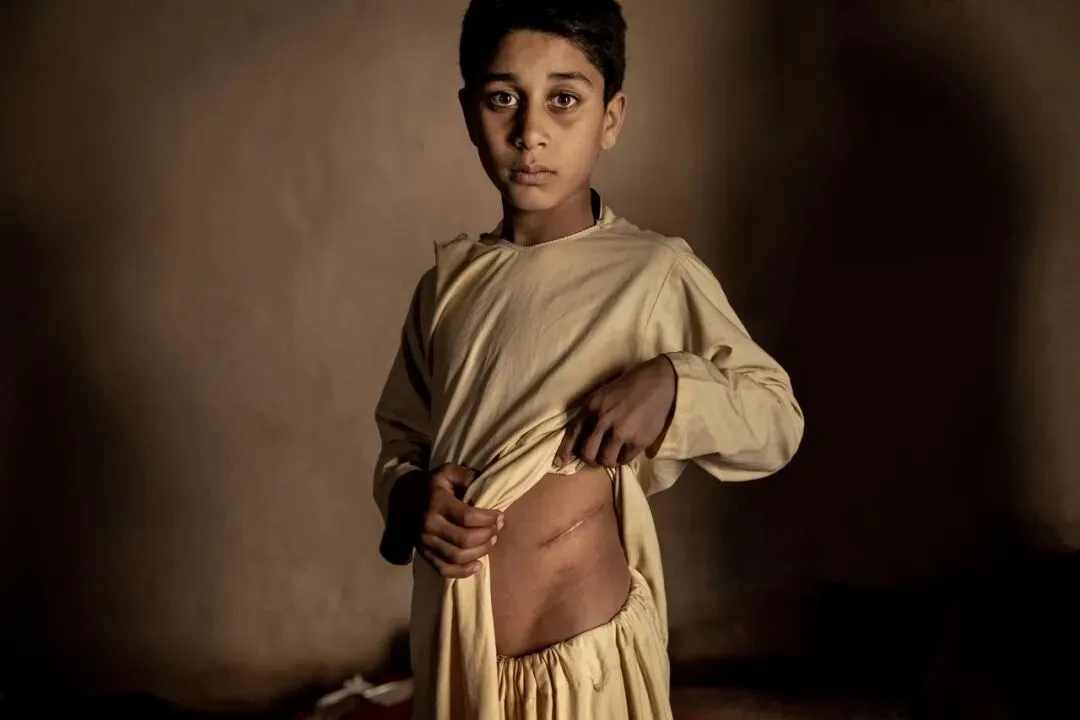
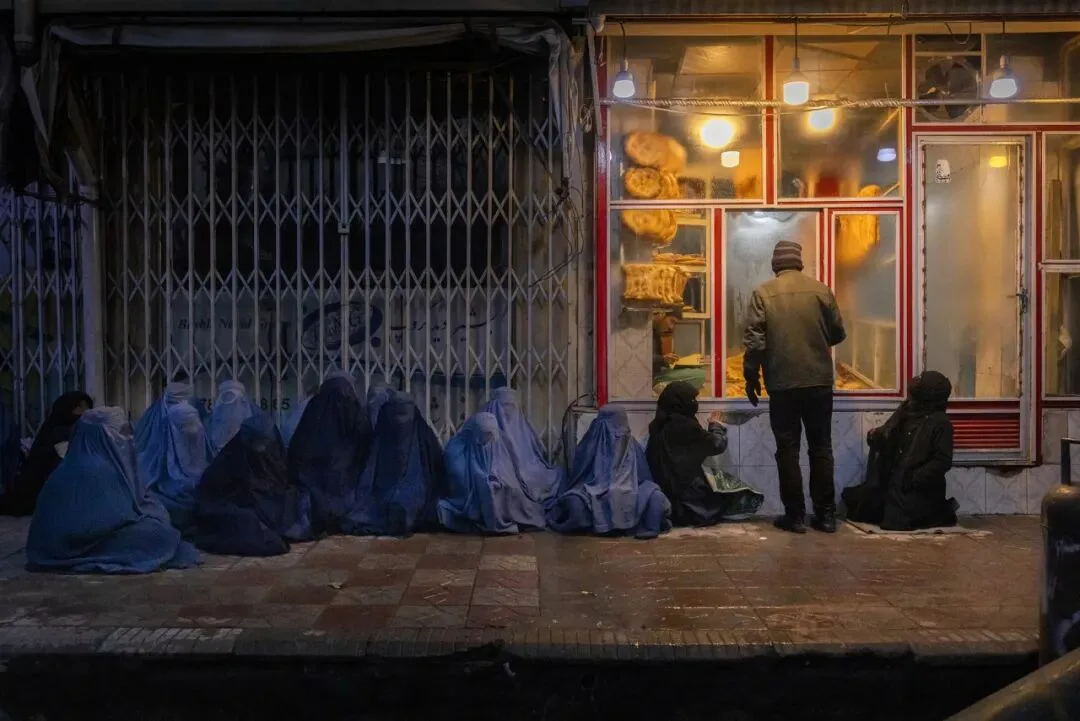
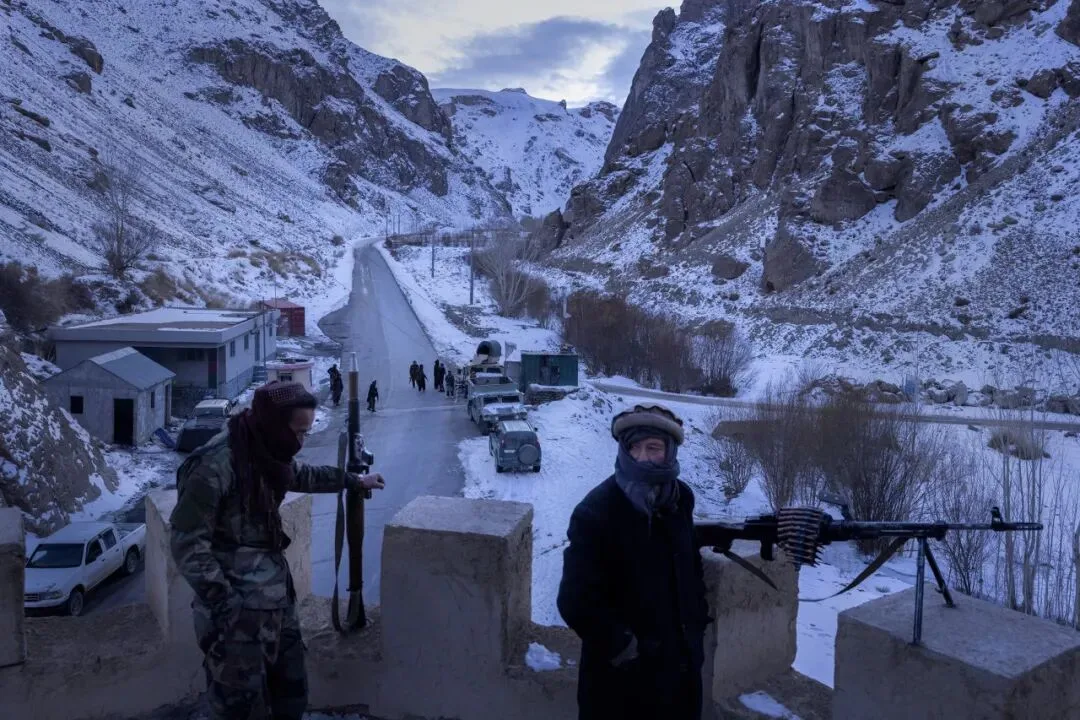
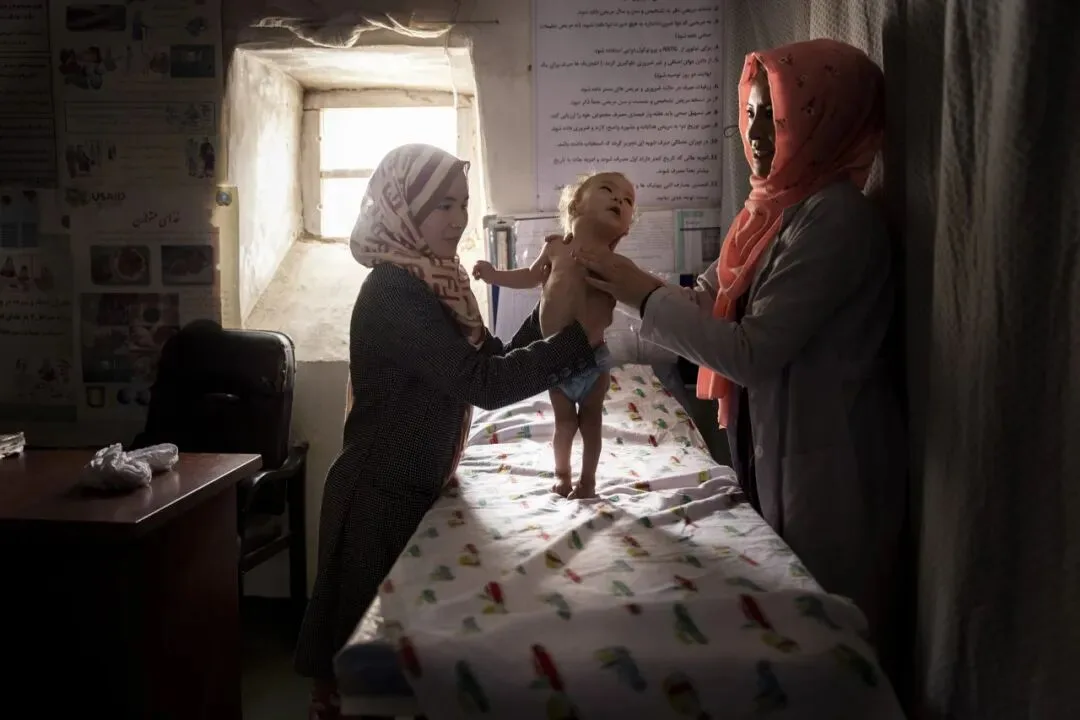
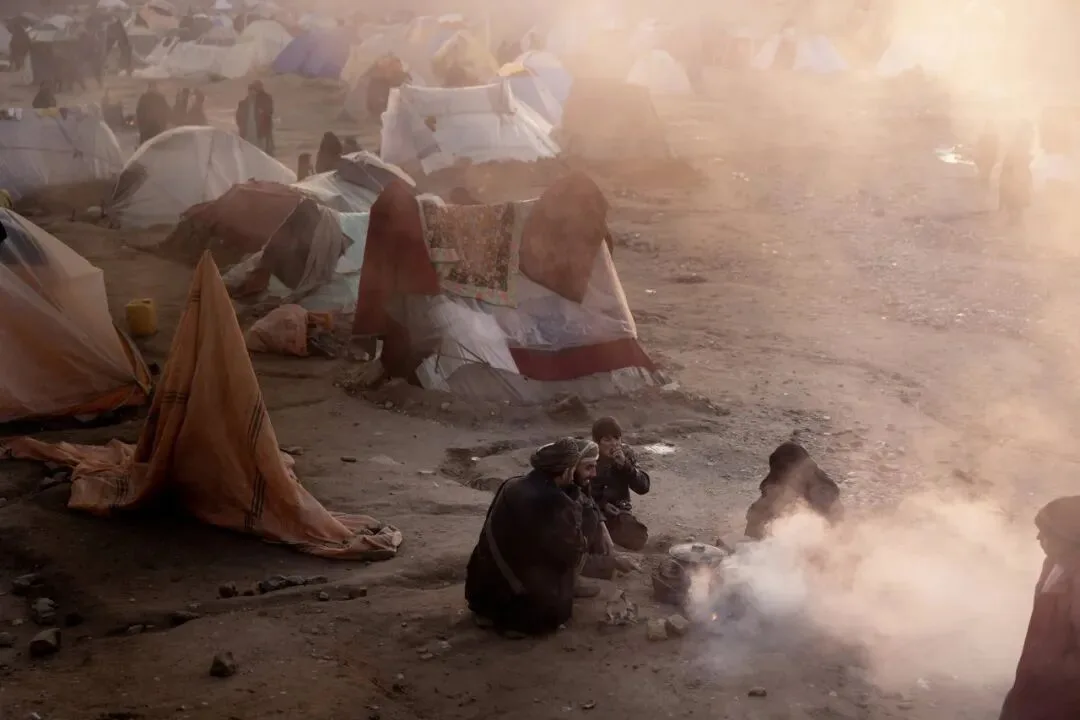
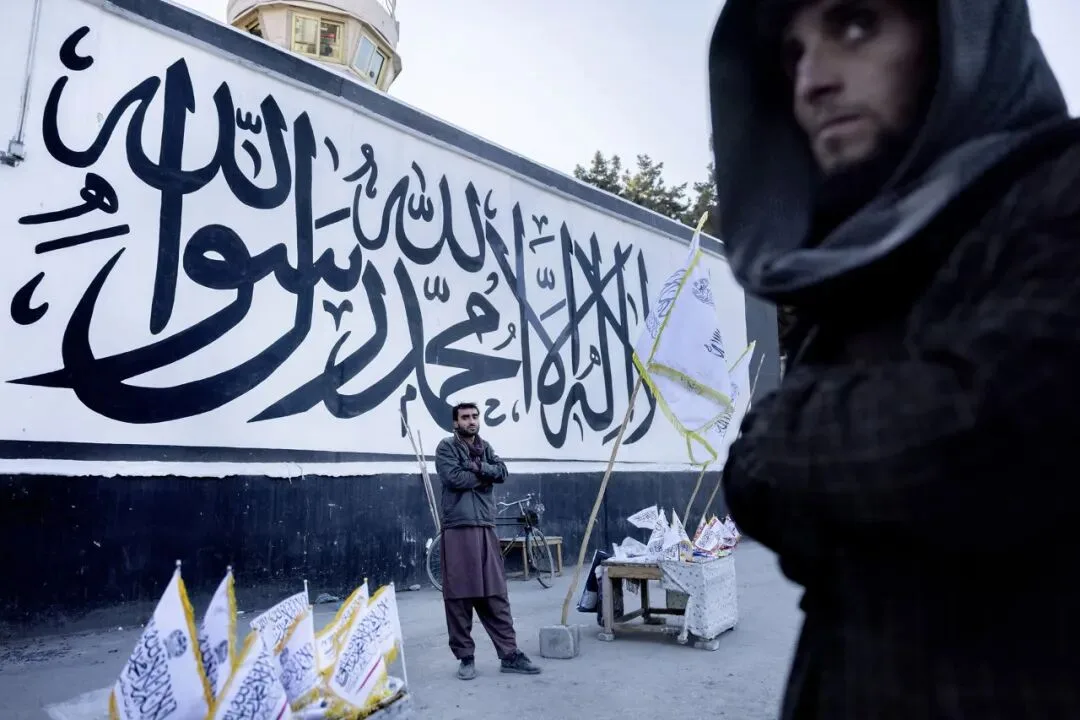
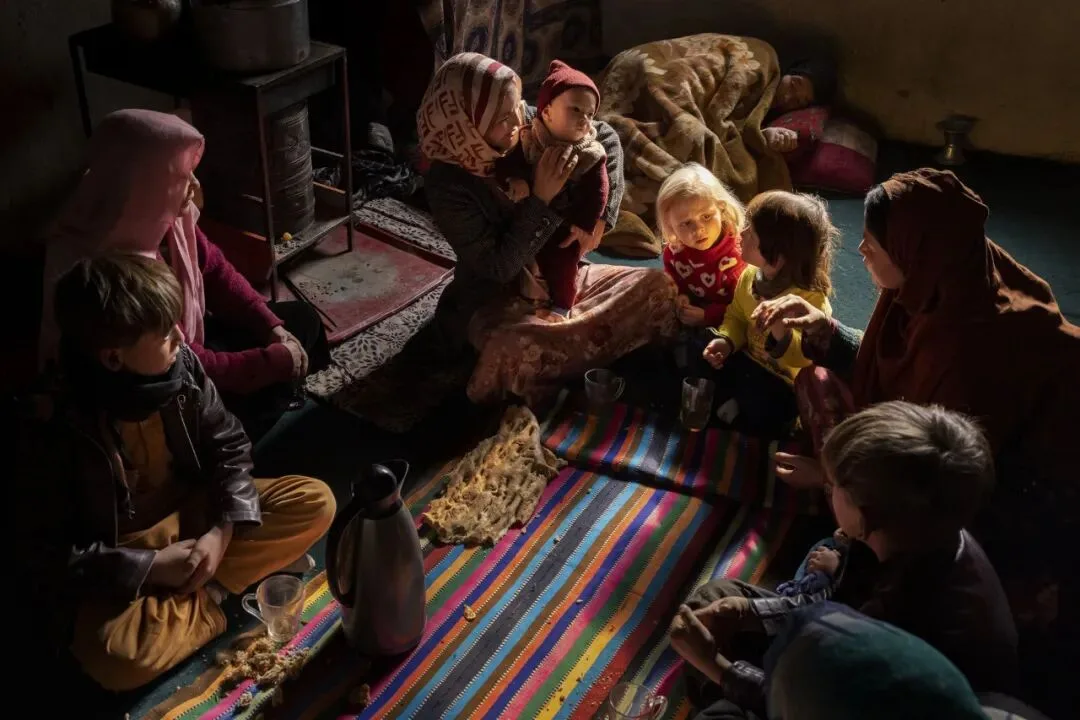
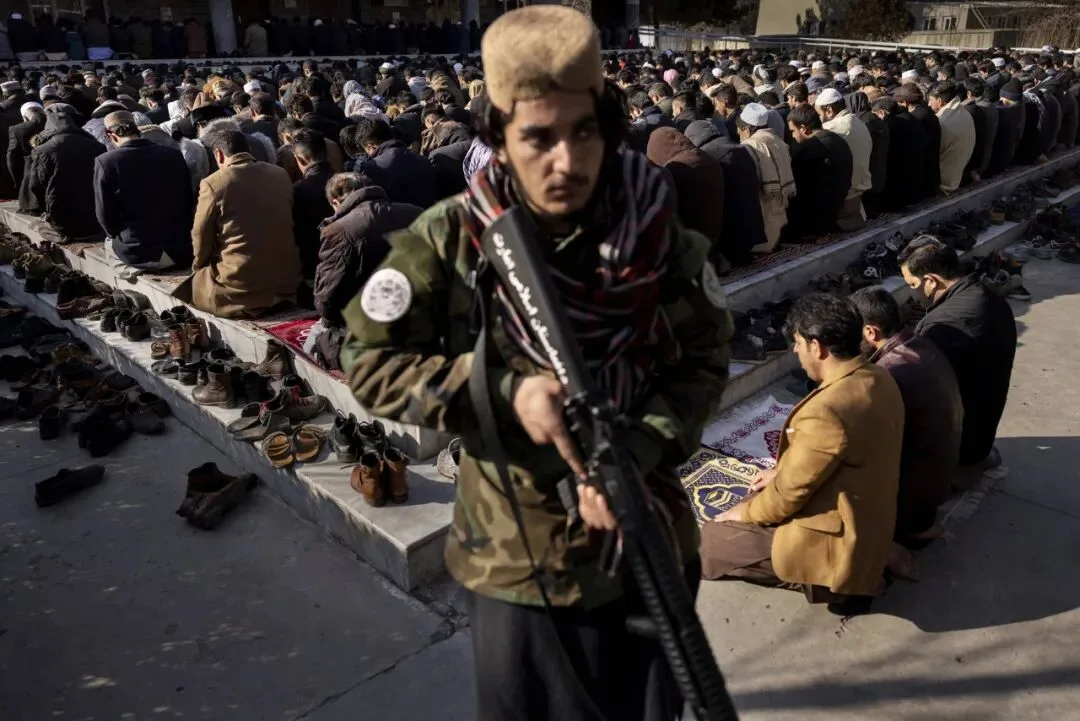
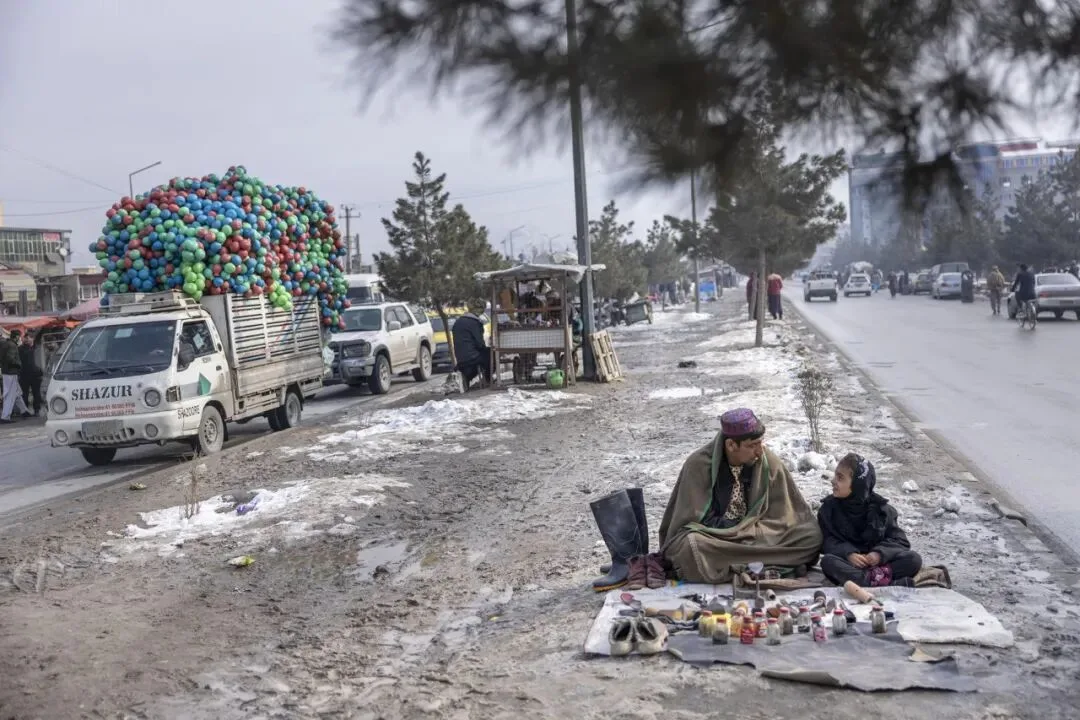
"The Price of Peace in Afghanistan" (《阿富汗和平的代价》)
Photographer: Mads Nissen
This story documents the various states of daily life of the Afghan people in 2022.
In August 2021, the United States withdrew its troops from Afghanistan, and the Taliban returned to power. Since then, international aid — which made up 80% of Afghanistan's fiscal revenue in 2019 — has been sanctioned, and 7 to 9 billion US dollars of foreign assets belonging to the Afghan government have been frozen. Losing these two income sources, Afghanistan's already fragile economy collapsed further.
Afghanistan's GDP fell to about 25% of its peak in early 2021. By 2022, an estimated 97% of the population lived below the poverty line, and 95% did not have enough food. According to UN statistics, 9 million people faced the risk of famine, and more than 1 million children were severely malnourished. The COVID-19 pandemic, severe drought, and the inability of aid organizations to provide relief to those in need all exacerbated the crisis, which was expected to only worsen by 2023.
Mads Nissen shot this story for Politiken. He said: "I hope this work can raise awareness and get more people involved in helping the more than a million Afghans in urgent need of food and humanitarian aid."